Teacher Weekly Planner: Lay Out a Week That Holds Up
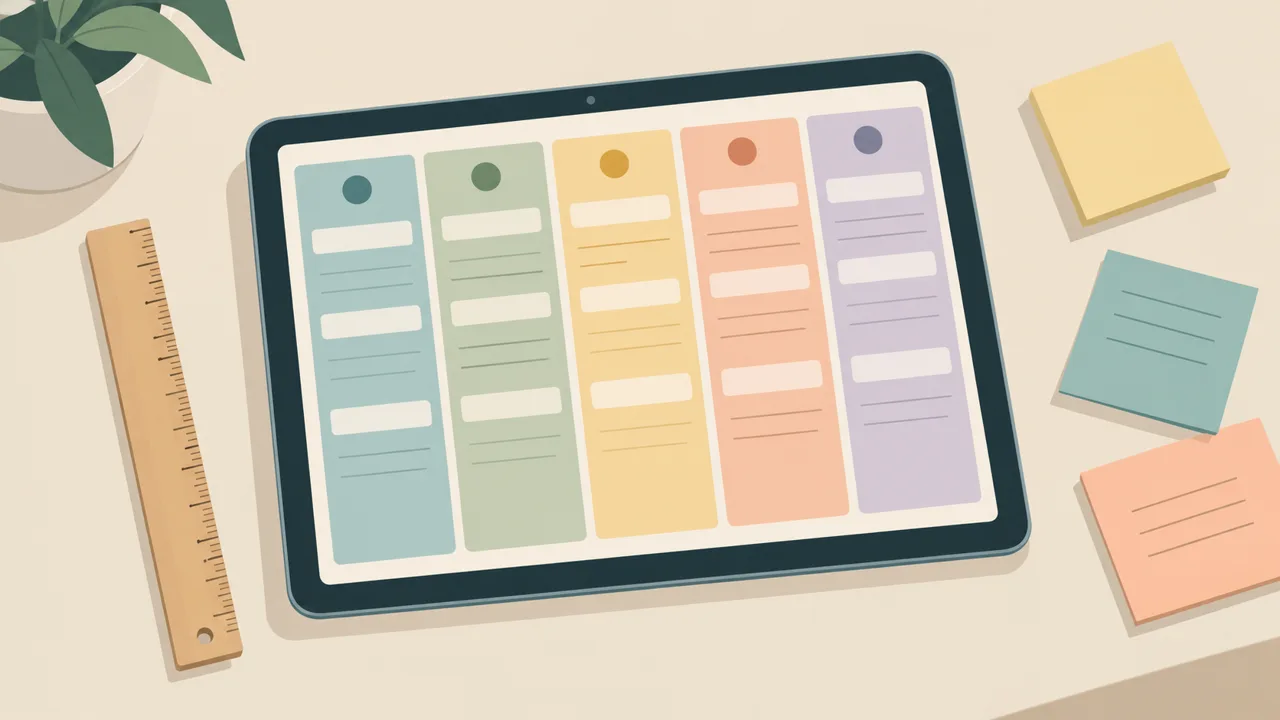
A teacher weekly planner has one test: can you glance at it on Monday at 7:30 and know the shape of the next five days? If you can, you start the week calm. If you need to scroll, flip between a lesson planner, an email inbox and a notes app, you start already behind.
A week is the right unit for a teacher. The timetable repeats weekly, marking runs on weekly cycles, and staff meetings, duties and clubs are set by the week. This guide covers how to lay a week out, a Sunday routine that takes under half an hour, and how to recover when everything goes sideways by Wednesday.
What a teacher's week has to show
A regular weekly planner shows appointments. A teacher's has more layers:
- The timetable. Lessons, rooms, form time.
- Duties and meetings. Playground, bus, briefing, department meeting, clubs.
- Deadlines. Reports, assessments, trip forms, parent evenings.
- Marking. Not as a vague pile but as hours blocked into specific slots.
- Preparation. The two lessons that need new resources.
- Life. Your own dentist, your child's school play, the meal plan, a run.
If your planner only shows the first two, the other four live in your head. That is where the stress sits.
Four layouts that suit teachers
Columns by day. Five tall columns, Monday to Friday, each divided into periods. This is the classic. It shows how crowded each day is. Best when your timetable is the main driver.
Rows by day with a priorities strip. Each day is a wide row, with a strip at the top where you write the three things that matter this week. This layout is good for people whose timetable is stable and who need help with the extra things around it.
Hourly week. Time blocks down the side. Useful for primary teachers with variable timings and for anyone fitting marking into small gaps.
Week with a side list. The week on the left, a "must happen" and "could happen" list on the right. It suits heads of department who spend half the week on tasks that are not lessons.
Pick one and use it for two weeks before changing. The goal is a layout that you stop thinking about.
The Sunday routine: twenty-five minutes
Sit down with a drink and do these in order.
1. Look back (5 minutes). What did not happen last week? Open the week page and read it. Move anything important to this week on purpose. Delete what no longer matters.
2. Fill the fixed items (5 minutes). Meetings, duties, clubs, appointments. These are the walls of your week.
3. Name three priorities (5 minutes). Not twelve. Three things that, if done, make the week a success. Examples: finish and return Year 10 assessments, prepare the new unit launch, book the trip coach.
4. Place marking (5 minutes). Find the pockets. Tuesday after school, Thursday at lunch, Saturday morning. Write marking in those pockets with a rough number of hours. If you cannot fit it, you have found the problem on Sunday instead of on Thursday night.
5. Protect something personal (5 minutes). One evening with no work, a lunch walk, a bath. Put it on the week as if it were a meeting.
That is the whole routine. It works because it limits the planning to what changes.
What to carry over when the week breaks
Every teacher has weeks where a trip, a cover lesson, an observation and a sick child collide. Planning cannot prevent those. A good planner helps you recover.
On Wednesday evening, take five minutes and sort the week into three piles:
- Must do: deadlines you cannot move, safety and safeguarding tasks, anything where someone depends on you.
- Move on purpose: write a new date next to it, and a reason. Moving with a reason stops a task from silently sliding for a month.
- Let go: things that sounded important on Sunday and are not. Cross them off.
In a web planner, tasks you did not finish roll to today by themselves. That helps, because the unfinished items stay visible; the risk is a growing pile, so sort once a week to keep it small.
Making the week work with a linked planner
A paper week is flat. A linked week is a hub: tap a day and see its details, tap a period and open the lesson, tap back to the month to see what's coming. Tidewell Life Planner is built this way. The PDF is for GoodNotes and iPad, with year, month, week and day pages connected by tabs, and a day dashboard that brings together your priorities, tasks, habits and meals.
For the teacher-specific layer, the Teacher & Student Edition (sold separately) adds a timetable of one or two weeks, lesson blocks, marking planned in estimated hours up to six weeks ahead, homework tracking, seating plans and cover notes. A one-tap reschedule shifts the week when something is cancelled, which is exactly what you need when a trip eats Thursday.
You do not need the edition to benefit from the weekly approach in this guide. You can run the routine above with the main planner by adding school items as tasks and appointments. The edition simply organizes them for you.
Example: a Year 8 teacher's Monday to Friday
Imagine a teacher with 20 teaching periods a week, a form group, one duty on Tuesday, a department meeting on Wednesday and a club on Thursday.
On Sunday she writes three priorities: return the Year 8 poetry essays by Friday, set up the science practical for Thursday, and send the trip letter. She places marking in Tuesday evening (two hours) and Thursday lunch (one hour). She sees that Wednesday has the meeting and a full timetable, so she keeps it free of tasks. On Friday evening she moves one unfinished item to next Monday, with a note that it needs the printer.
By Friday she has returned the essays, run the practical and sent the letter. The two pieces she did not finish are on the next week's page, with a reason. That is a good week, and it did not require heroics.
Mistakes teachers make with weekly planners
Writing lessons in the week page. Lesson detail does not belong in a weekly overview. Link to it.
Not planning marking. If marking does not have a time slot, it will take your evenings.
Using the week as a to-do list. The week is a map. The to-do list lives on the day page.
Planning in ink. Use a colour you can change. A week plan should bend.
Forgetting to review. Plan on Sunday, review on Friday. Without the Friday review, you never learn how long things take.
Supporting your week with a weekly review
The five-minute review that closes the week is the cheapest improvement you can make. The weekly review guide explains the routine, and the digital weekly planner comparison shows seven layouts side by side if you are choosing a format. For the full set of pages a teacher needs, see the lesson planner template guide and the digital teacher planner guide.
A good week is not a perfect one. It is a week where the important things had a place, and the unimportant things did not get to take it. A teacher weekly planner is the tool that helps you tell the difference.